 |
| Dungeon I - Eastern Palace Entrance |
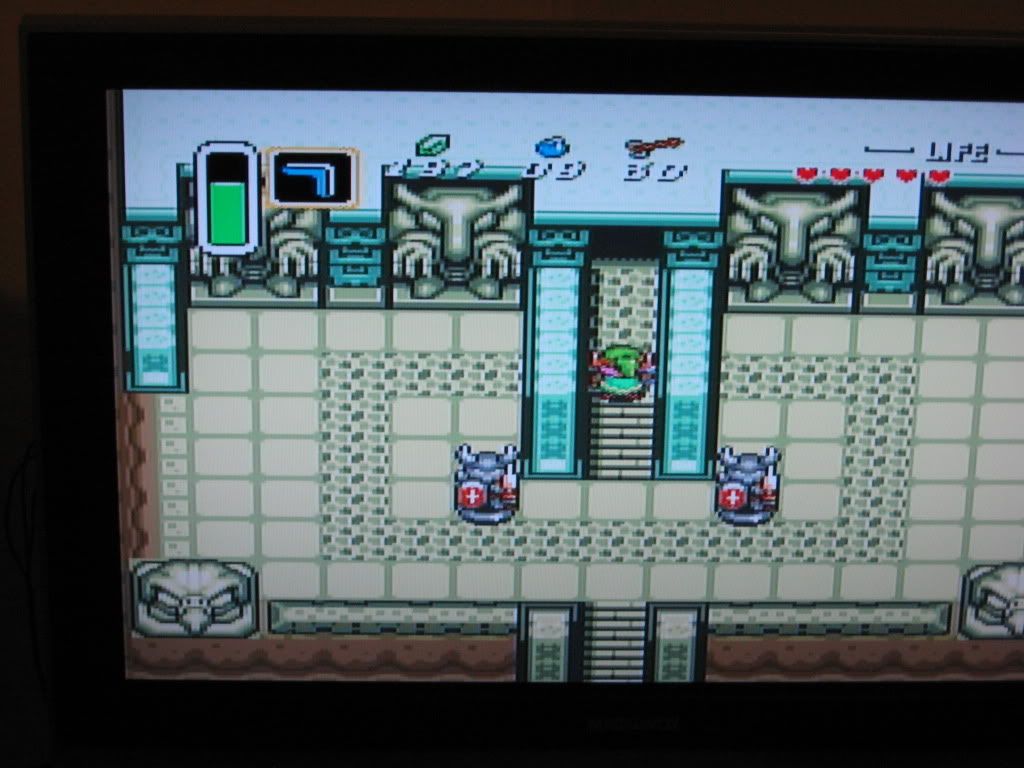
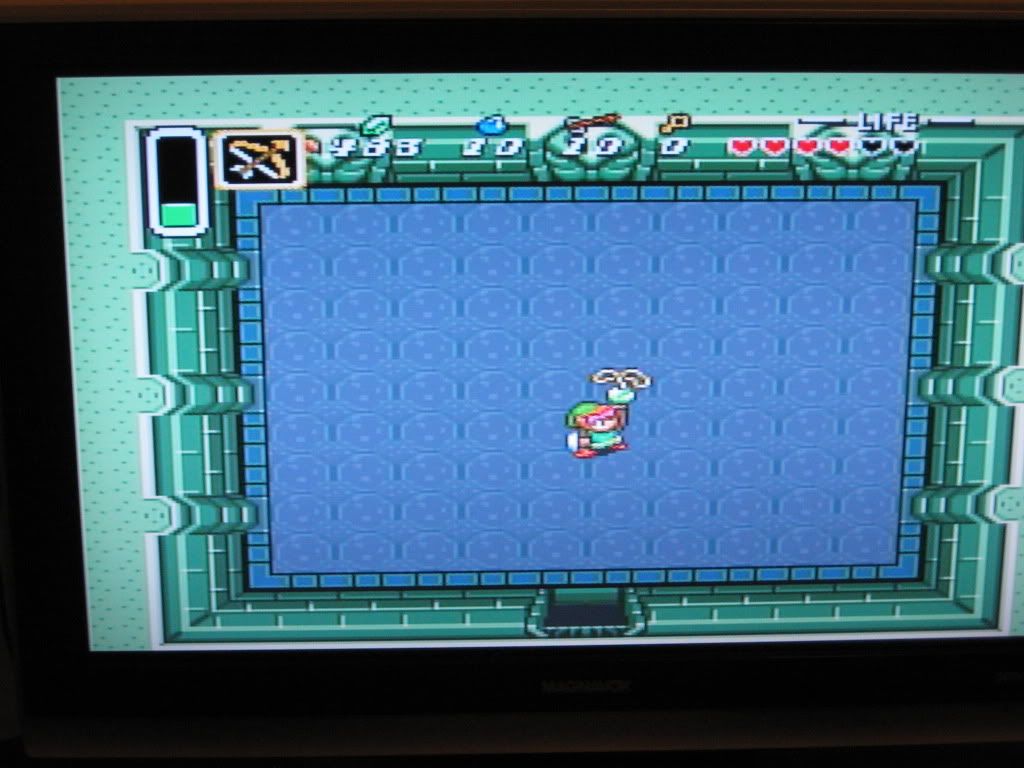
So here we are at the entrance to the Eastern Palace. This marks the beginning of our adventure, really, though the game has still layered many mysteries to the story for us ahead. Right now, all that we now, thanks to the wisdom of a few old men is that within these palaces in Hyrule lie treasures called "pendants" which in turn will allow Link to free the Master Sword from its slumber within the Lost Woods, the only weapon capable of defeating the evil wizard Agahnim who is bent on Hyrule's destruction. All that on our minds, let us take our first steps into Hyrule's first dungeon (which, like any first dungeon in any Zelda, proves a piece of cake for our ill-equipped hero).
 |
| Telepathic Tile |
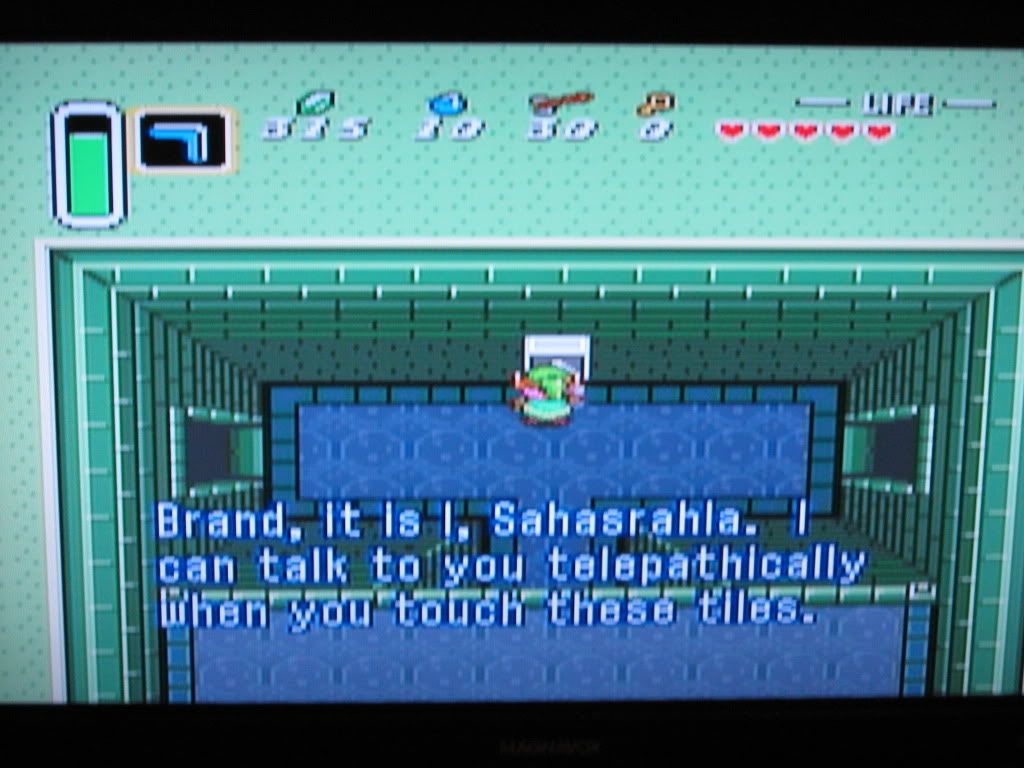
This game introduces an element in double spectrum. Not only are the NPCs more heavily involved with the plot, and not only are there far more of them to interact with, but Link can communicate with a select few of them (namely Sahasrahla and Zelda) through Hyrule's latest advances in technology while he is in the confines of its many dungeons. This way these key players in the plot can be advising him as he ventures through dangerous corridors all in the name of saving Hyrule. While this advise is typically common sense to the seasoned player; it does add a sense of realism to this already realistic game: after all, these key NPCs are set more to rest knowing that they can help Link through these dangerous places, and Link doesn't feel like a meta-gamer the entire time he ventures through the dungeon.
 |
| The Bow and Arrow |
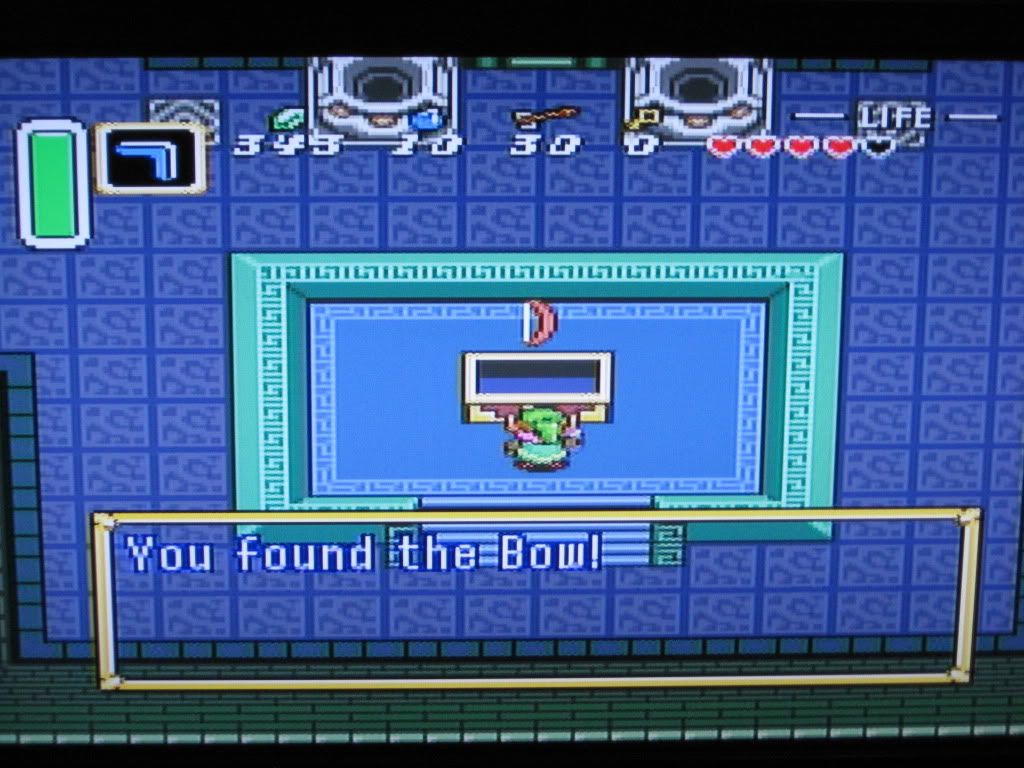
A key feature of every dungeon is its treasure chest, which holds an item vital to Link's quest in some way. Typically, the item found within a dungeon's big treasure chest is the key to defeating its boss, which links finding this treasure with the completion of the dungeon. Other major features of dungeons that aren't typically found in the over-world are keys, locked doors, the big key (which opens both this treasure chest and the door to the boss' lair), treasure chests and as well a variety of enemies only show up in the dungeons. This first dungeon doesn't throw anything at Link that he can't handle with a little clever swordplay, or once he gets it, the bow.
 |
| Armos Knights |
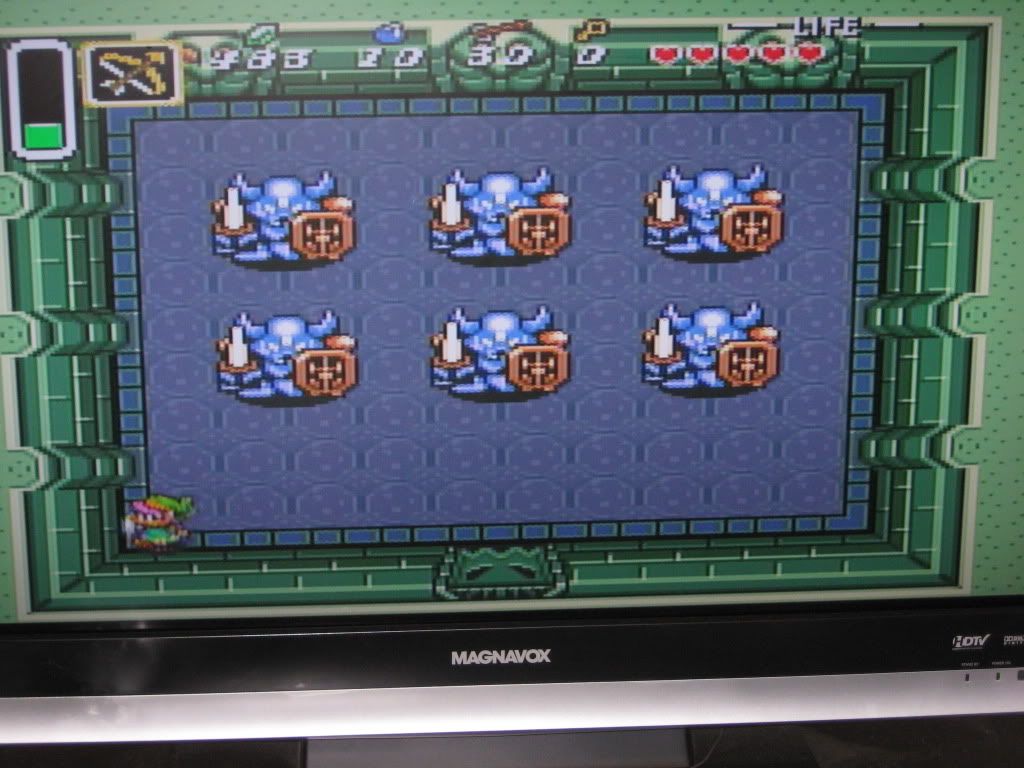
The Armos Knights have to be the stupidest boss in the history of Zelda. But not really, the stupidest boss comes later, which is awkward. But either way, these jumping stone-heads aren't a threat to Link. There are six of them and they simply jump around the room in different formations, trying to crush Link. All Link has to do is remain stationary near the south wall and rain arrows into these fools and one by one they will perish. Quite simple, really. One of them tries to "cheat" near the end, getting clever with his jumping technique. So simply switch to the sword and put an end to his shenanigans.
 |
| Pendant of Courage |
Once the Armos Knights are defeated, Link is rewarded with the Pendant of Courage, his first step towards completing the first part of his journey and his first step towards the Master Sword. We're on a roll here!
 |
| Pegasus Shoes |
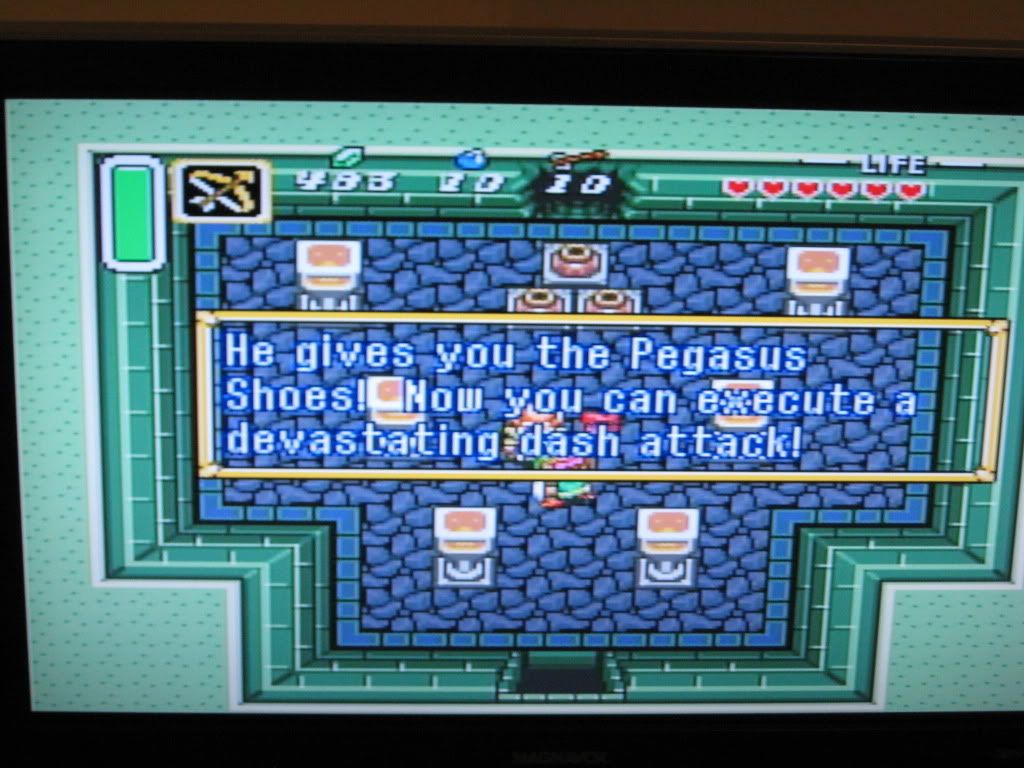
Back at Sahasrahla's we are rewarded with the Pegasus Shoes, an item to be found in several titles later in the series. Someone was paying attention in the series that we, as gamers, are impatient and don't want to walk everywhere. To give it a practical use there are several puzzles which require the use of these shoes but their aesthetic quality of making Link travel faster (especially when his walking speed is so terribly slow) is amazing. One way or another, Sahasrahla spills the beans on the Imprisoning War and tells us a tale of how terrible it is that the Great Cataclysm is now upon us. I suppose it is terrible, because countless knights and wise men died trying to prevent it. I suppose that it is the way, though, and it must be prevented again. He speaks to you in an almost Yoda-like fashion (without the grammatical inaccuracy) and weaves a tale of your destiny, saying that your fate must be tied to the Great Cataclysm since you carry the blood of the Hylian Knights. Well...does anyone else? We never actually find that out, all we do know is that they were all but destroyed by the Imprisoning War and that the Wise Men gave their lives (this is implied by an image of their graves) to seal Ganon in the Golden Realm. Another puzzle piece...
 |
| Magic Powder |
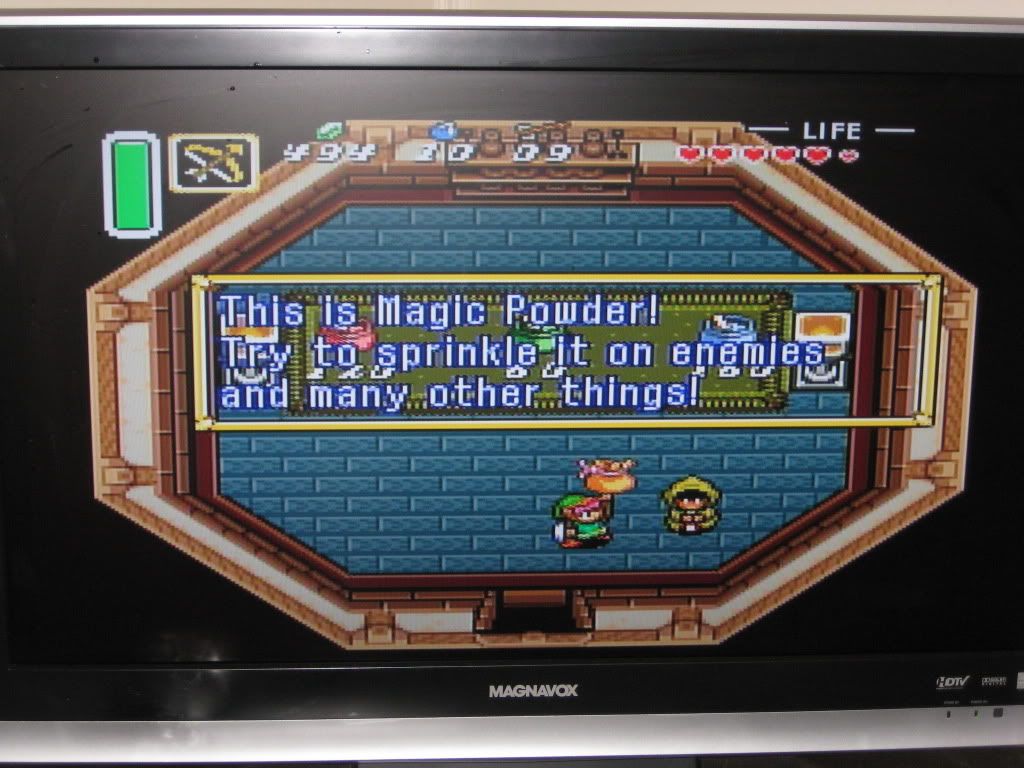
So with all this hanging on our shoulders now, let us return to the witch's hut and get the magic powder that they have been working so diligently on. Amazingly, so long as you have magic, you have magic powder. I guess that's logical, but it kind of reminds me of a glass that never empties. This stuff seems so useless right now, but it proves so useful in the game's longevity. It turns antifairies back into fairies (which helps Link gain back his life) if he's lucky enough to hit them before they hit him. It solves several puzzles for Link (on this note, it apparently makes for a good itching powder and is an eye-irritant). I like that they added an item to Link's quest that is interesting and has multiple uses.
 |
| The Ice Rod |
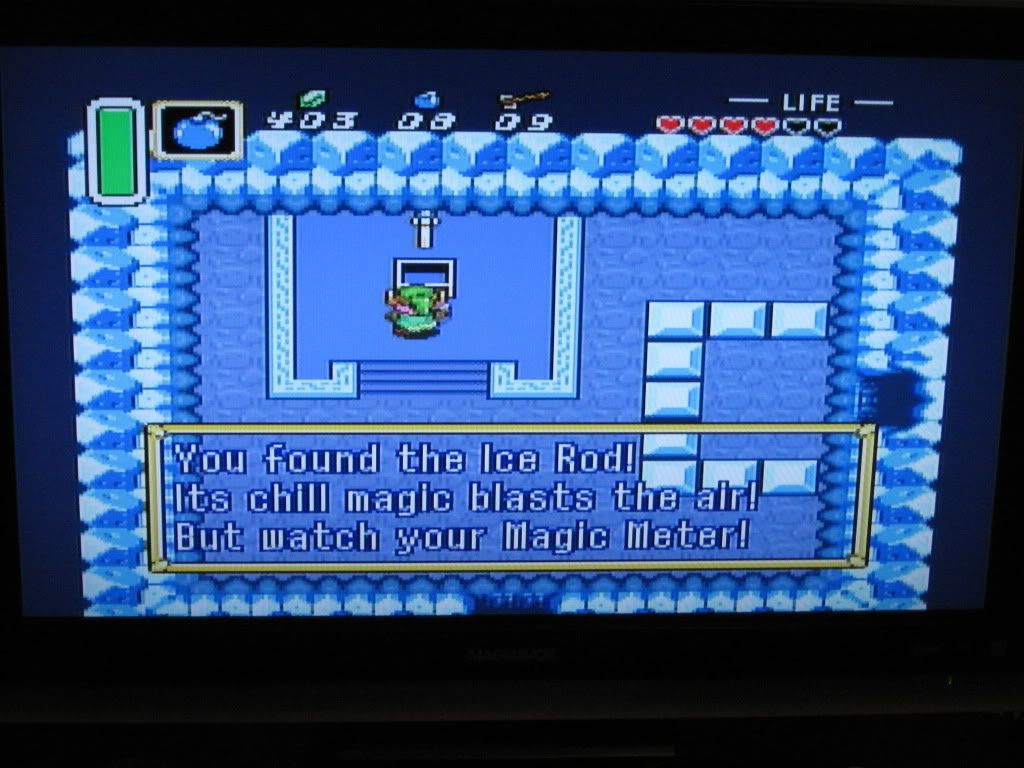
Next on our list of things to pick up is the Ice Rod. This little baby is actually not required to finish the game, although it does make one particular boss much, much easier...so it's worth picking up (even though we won't face this boss until much, much, much later in the game). I don't really like limited items, but because of the implications of what this particular boss would be like without this item, I do like the Ice Rod.
 |
| The Book of Mudora |
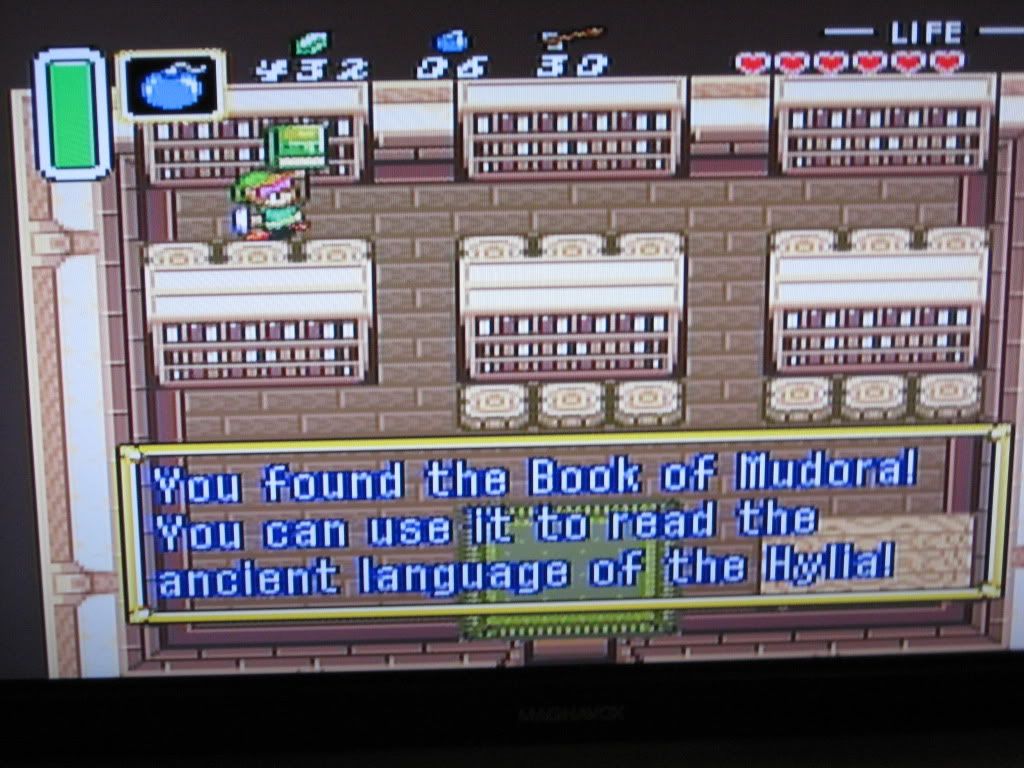
The final item on our little equipment excursion is the Book of Mudora. This legendary artifact is actually a language text (yay, we get to learn!) and permits Link to translate ancient Hylian text (which appears nothing but gibberish text on the screen otherwise) when he holds it up. Take THAT, Rosetta Stone! I guess this method is far superior! Either way, the Book of Mudora is useless in that it only helps us solve puzzles in which Hylian text is involved, which are few and far between, but it helps us to gain the elemental medallions and entrance to the Desert Palace, so it is necessary for completing the game; I suppose it must be respected. Besides, this book adds a linguistic element to this game which is rather neat: one must wonder the origins of ancient Hylian, or let alone modern Hylian, and why just the book of Mudora was left behind to help those of the modern day understand this ancient language. The last puzzle is most discernible: obviously since the ancient language has been used to lock away the keys to several dungeons which the goddesses would know to be important, they would have arraigned for someone to write the book of Mudora. My guess is that Hylian evolved because the modern tongue was just easier to use in everyday communication.

No comments:
Post a Comment