Tuesday, August 31, 2010

Storming Hyrule Castle

Link's Uncle Passes On
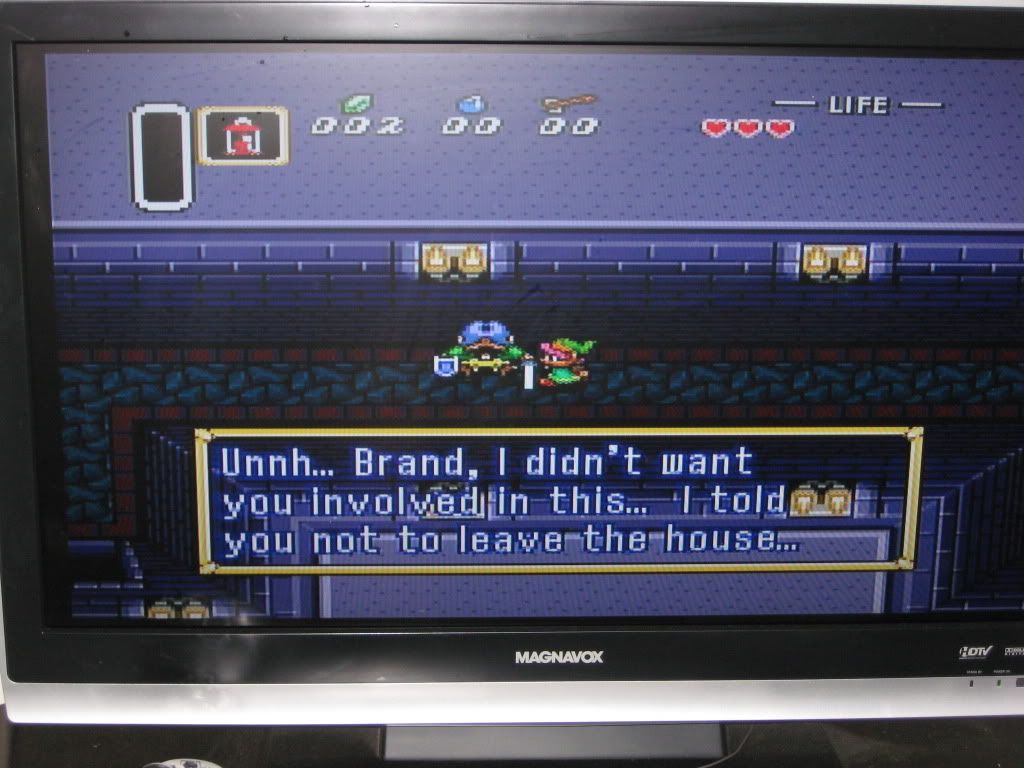
So we arrive within the castle walls.  Like any castle, it appears impregnable.  I should hope it would be so.  After all, it wouldn't be much of a defensive keep against invasive forces if say, the enemy could walk right up to the front door, knock and say "Password" and get in!  I digress.  Link finds his way through this dank passageway to find his uncle who had left before him, lying mortally wounded.  Wow, Nintendo kills a character!  That never happens!  One way or another, he tells you how to use his sword with his dying breath and gives it, along with a shield, to you.  That's good, now we can actually defend ourselves and attack things!  I never really thought much of this moment, though I imagine it actually is very moving for Link...this is his family, after all, and because he didn't act quick enough his uncle is dead.  What a tragedy.  But we must move on, for Zelda is also still in trouble somewhere deep within these walls.

Hyrule Castle Foyer
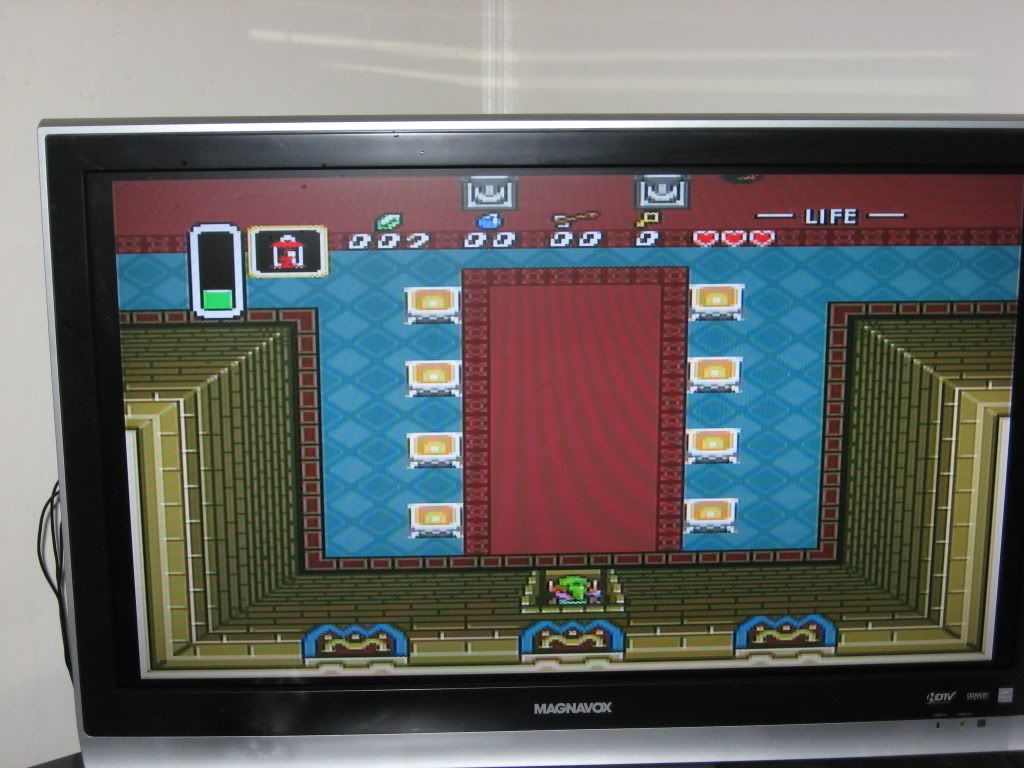
A hop, skip and a jump through the castle courtyard and we arrive in the main building itself.  Quite nice looking, I might add!  Also, those of you who are paying attention will notice that this is the first time in a Zelda title that we ever truly set foot into Hyrule Castle.  In Zelda I, you only go into the underworld for structures and in Zelda II, you enter palaces, the main hub of which is North Palace, not Hyrule Castle.  Hyrule Castle, while a magnificent structure, is not the hub location of the game: that'd be your own house (what a deal, everything is convenient!)  Now, for our first visit into this castle, it doesn't seem like much with just a few rooms and all and a couple of weak enemies, but it gets better, it always does.  In fact, the primary floor of Hyrule Castle is of no consequence to Link except to provide access to the catacombs and the upper floors, which are of consequence.  Right now in our quest, we are only interested in the catacombs: the upper floors won't even let us go far because we don't have the sword of evil's bane.

The Boomerang
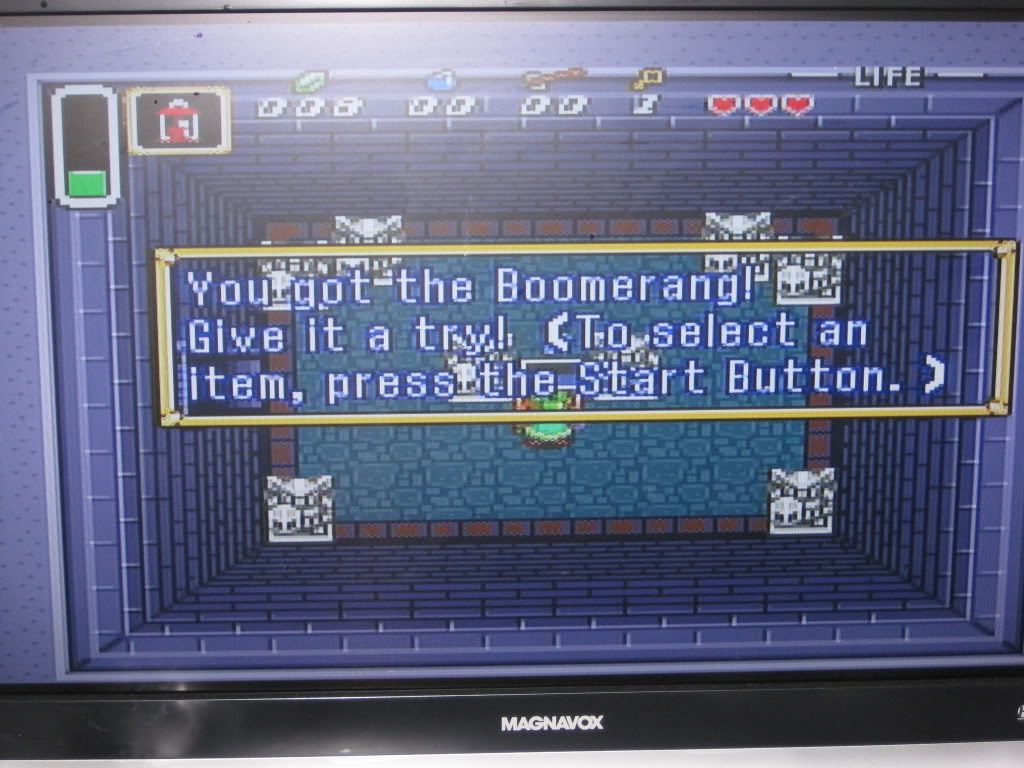
This game reintroduces items which you must use peri-battle, rather than have them be constantly effective or active on the overworld by the press of a button.  This was a welcome return, for a Link who only totes swords is quite dull.  Our first item is the Boomerang, which in this game doesn't serve too much usefulness.  You toss it, and if it goes far enough, it'll stun some enemies (and kill a few).  You can eventually promote the item so that it will fly farther, but this isn't much of an improvement.  It's a mediocre item to help you through battles if your sword skill is bad, really.  The catacombs here seem long, but they really aren't, and very quickly we find ourselves in the prison, where we meet our very first boss.

The Mace Knight
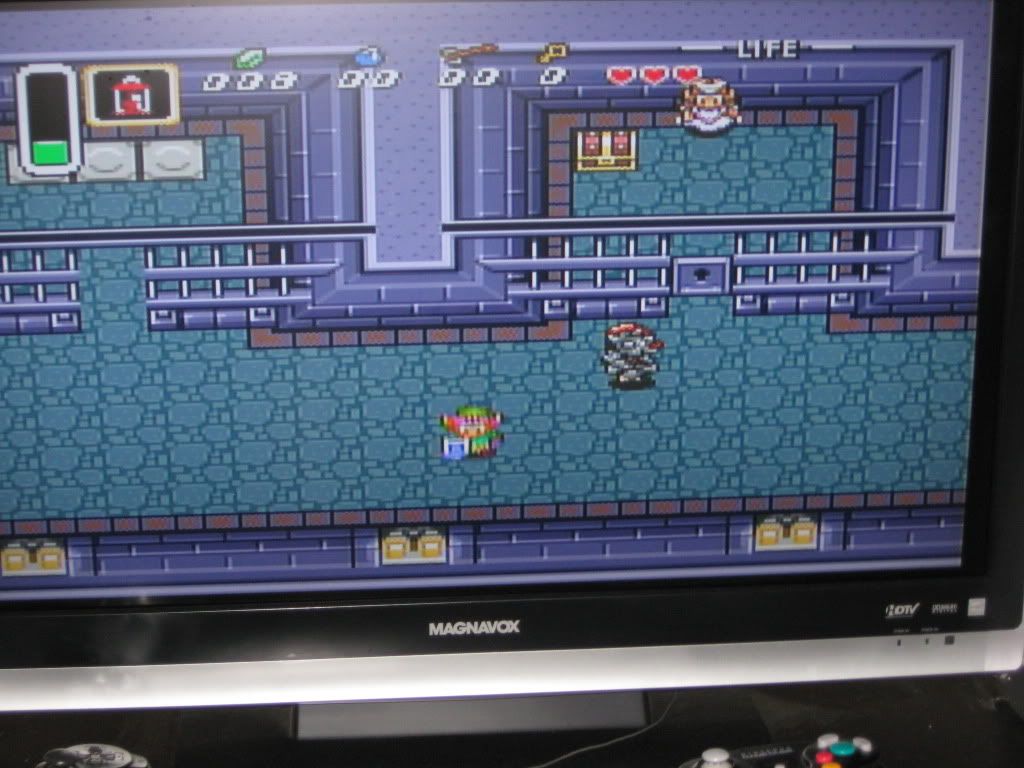
This guy is pathetic for a boss, if he can even be called a boss.  I do simply because he's the last enemy you'll find in this section of Hyrule Castle and he's guarding your goal: Princess Zelda's cell.  While powerful, especially for a three-heart weakling like us, with proper timing this guy is actually a chump.  He swings his mace around several times like a numbskull.  Seriously, good pitchers in baseball don't announce what zone they're aiming the ball for, and that's exactly what this mace knight is doing with his mace.  As long as you're careful and step off as he finishes his wind-up, you're good to go.  Besides, he looks kind of...weird.  Meanwhile, Zelda just sits in her cell, watching.  She could've helped...but then again, maybe she's unarmed.

Rescuing Zelda
You've saved Zelda, so the game must be over, right?  Wrong.  She tells you more about the wizard's vile plot to send her to the dark world and to break the seven wise men's seal; and tells you a great deal about triforce lore that no one has ever known before.  I guess Princesses have the time to read up on all of that.  One way or another, she tells you that the two of you must make your way to the Sanctuary (yeah, no one will think to look there, it's only attached to the castle!) and while your enemy sees you and gets angry about it, trying to kill you, they obviously don't care about the princess behind you who's probably worth a lot more to their boss than you.  Alas, the flawed logic of a minion!

Escape to the Sanctuary
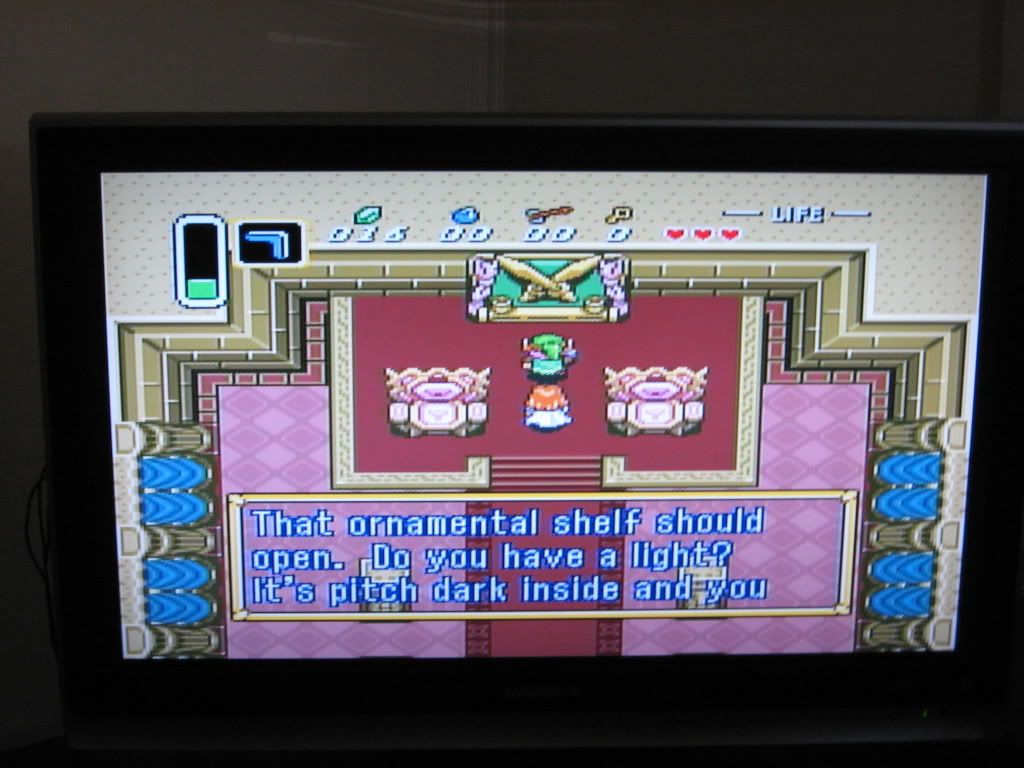
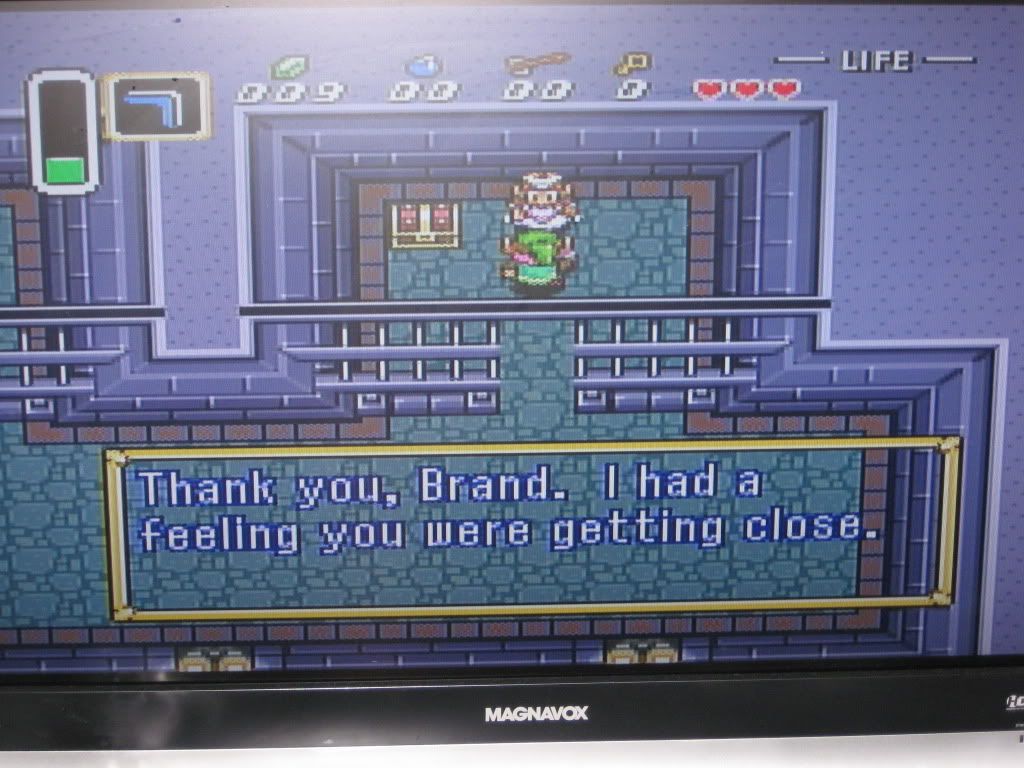
After a bit of exploration of the useless first floor of this castle, Zelda and Link make their way to the giant throne room, where there is a shelf just saying "Here!".  In case you didn't notice it though, Zelda also points that out and then she actually does something...she helps you push it out of the way, and you enter the sewers which attach the Sanctuary to the Castle.  That's just weird...sewers attach the holy Sanctuary to the Castle.  I don't even think I won't to think about an explanation to that one.  Either way, Zelda's help explains why you weren't able to do this if you visited this room before; I suppose those 20 extra newtons of force really made all the difference.  : )

The sewers aren't pleasant because you'll have little to no light (this is why Hyrule Castle, and your home, presented ample opportunities for artificial light in the Lamp).  Not to mention thinking about the trudge that you and your princess are having to walk through...what would the commoners think if they knew the Princess walked in their pee?  After this seemingly long adventure to do what seems like the ultimate goal of the game (which is really only the tip, tip, small tip of the iceberg) we emerge in the Sanctuary.
Monday, August 30, 2010

The Story Begins

Link starts off his quest on a new Zelda staple: as opposed to the previous two titles where Link originated from absolutely nowhere and had no place to call home himself, this Link has a home and this is where we start the game (and virtually every title from here on out will start in Link's home).  The story also, for a welcome change, is right in our face...from the very beginning.  You can't avoid it, the events start right at the beginning and are en media res.  The plot makes you follow it although you do have freedom to explore on the side, adding a deeper dimension that the previous titles did not have.  When you start the game and climb out of bed, you are contacted by a voice...

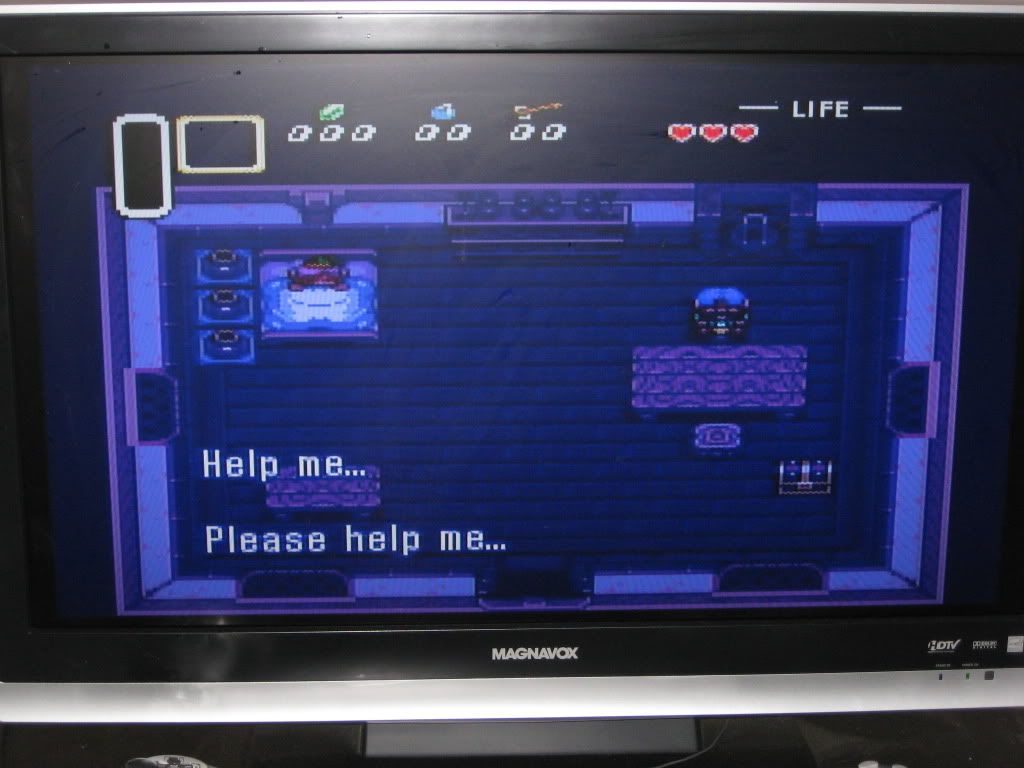
Zelda's First Contact
Much as you would like to ignore the voice and go back to bed, the voice continues to harass you.

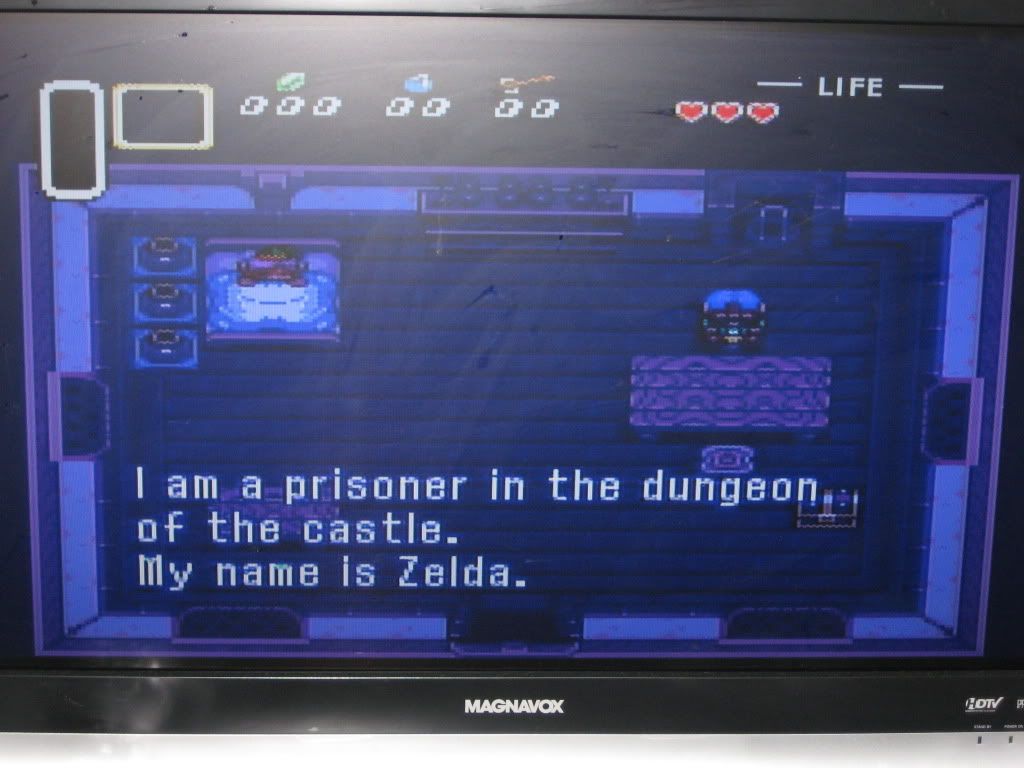
Zelda Pleads For Help
And now the voice is pleading for help and introducing itself?!  I guess we should climb out of bed and help!  Through this whole introduction, the whole beginning of the plot is thrust at you: how a wizard named Agahnim has kidnapped the descendants of the seven wise men and that he is trying to break the wise men's seal by sending them away.  Wow, all that information already?  Of course, what we don't know is how little Princess Zelda is actually telling us...there is a lot hidden in those words that we have to uncover, especially that "to rescue those seven maidens, you have to travel to another dimension of reality and traverse seven difficult dungeons."  Of course if she had told Link that, I'm sure Link would have jumped right into action and not procrastinated at all.  All she's telling you, really now, is that she needs to be rescued.  A small, minor task that we can easily handle...but one that will open the can of worms on us and they won't stop until they wriggle their way to a dramatic climax.  One of the best things to is that if you want to, you can do a little side exploring while things are downpouring around Hyrule..and giggle to yourself that Zelda is still whining for help.  Of course, that would be mean too.  We should help her, after all, our uncle went to help her too and we wouldn't want to let him down.  : )

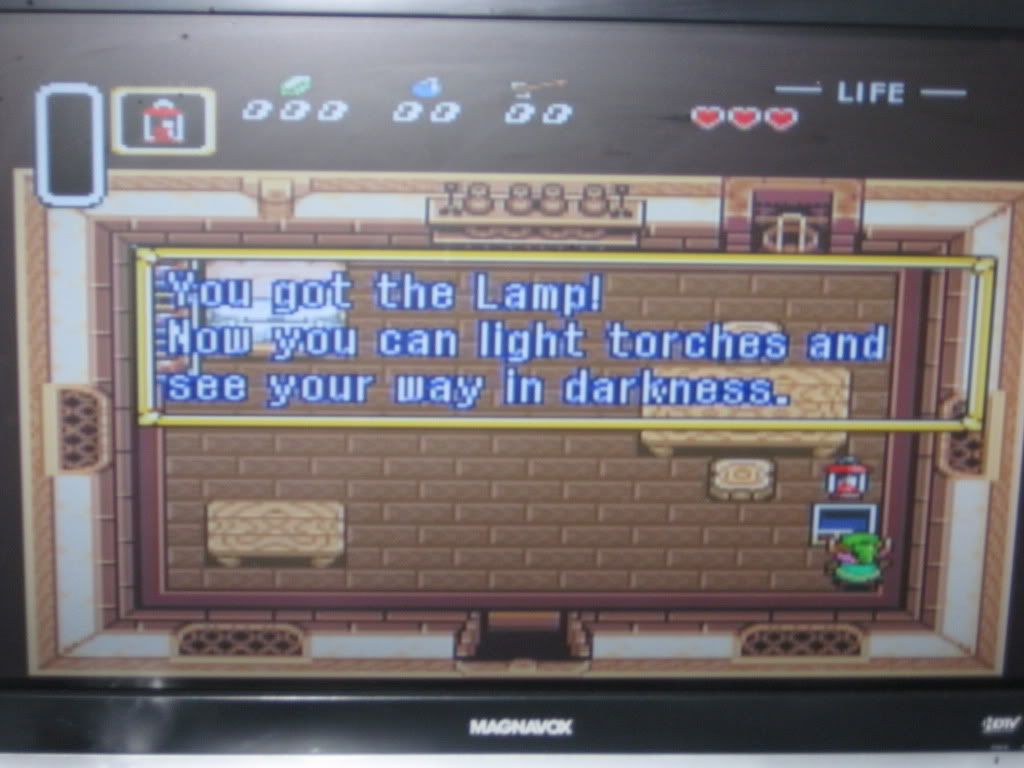
The Lamp
Before we go though, let's check out that treasure chest...a lamp!  Yay, I'm afraid of the dark and mostly the things that go bump in the night through it.  The funny thing about this is it introduces the Zelda "don't worry, you're not that screwed yet into resetting..." element that you'll find in a lot of other games (i.e. Fire Emblem.  holy moly.)  Instead, if you DON'T pick up this item here, in the dungeon that we are coming up to, you have three opportunities to pick it up.  The infamous Zelda "here, you REALLY REALLY need this, I'm not going to let you advance without it!" programming.

One way or another, Zelda has asked for our help to gain her freedom from some evil wizard's clutches who apparently has some wicked scheme up his sleeve.  We'll have to see what that's all about!


Friday, August 27, 2010

A Link to the Past

LinktothePastGroupA001.jpg image by amaraskyia
Title Screen - A Link to the Past
The next adventure on our quest to save all of Hyrule is The Legend of Zelda: A Link to the Past.  This is one installment I actually never played on the original system: back on the cartridges, the original Zelda frustrated me and thus I had little time or patience for the series past that.  Little did I realize that everything that had frustrated me about the original (the poor action system based on 8-bit graphics) had been remarkably smoothed out in this title.  The first time I played this on the virtual console for the Wii, I regretted never playing it before.  It is a great title, full of action, adventure, puzzle and most of all, this title expands upon the element introduced in Zelda II: an interwoven plot.  While in Zelda II this was minimal and the non-player characters hardly said much of any importance, they were still vital to your quest.  This game expanded upon this, making the plot the core of the game and forced Link to uncover the mysteries behind the history of the Imprisoning War in order to achieve his ultimate goal (which he gets to do twice): rescue Zelda and put an end to evil's reign.  In addition, the NPCs begin to be named and say more than just "I can't help you" or "Step inside so I can 'heal' you."  This game was probably the staple in transforming the Zelda series from action-adventure into a real role-playing game, while still retaining the elements of action-adventure.  One of my favorite stories in the series, A Link to the Past explores the events after the Imprisoning War and Ganon's attempts to escape and realize his dream of ruling Hyrule and the Golden Realm.  The interesting subtlety surrounding all of this is that the King and the sages of Hyrule brought all of this on themselves, given that they were the ones who went to seal Ganondorf in the Golden Realm.  This is a recurring theme throughout the series: how Hyrule brings all of this on itself by trying to solve their problems.  One way or another, with the best graphics to date, the best action system to date and the first game with true RPG elements, A Link to the Past was truly revolutionary.

Tuesday, August 24, 2010

Review - The Adventure of Link

The Adventure of Link is an exciting installment in the Legend of Zelda series, and is by far the most difficult of the series' titles.  While hard, it is always exciting, always thrilling, always challenging and always fun to play.  Before one defeats the game it is overwhelming all of the tasks that you must accomplish under your limited skill; but as you advance you realize how much of a blur the game really did pass through.  Then you defeat the game and realize you want to play it again.  While this game has less replay value than the original (it is a little more frustrating overall and the replay is no different, really, than the original quest) it certainly does posess a charm to it.  In addition, no other Zelda followed in this game's footsteps to alternate between top-down overworld exploration and side-scroll dungeon exploration.  This game, I believe, was the first step the series took towards seizing the action side of action-adventure by taking more advantage of the engine.  This was only built on as the series continued, as were other elements.  One negative element is that Link's only weapon and real item through the game is his sword/shield.  He has no other means of combat, and while this is allayed by magical ability, a series of items which virtually all have extremely limited useage (and in addition, the magic spells also suffer the same miserable limits to their versatility) is a little boring.  All in all though, it's a good game.  Not the best of the series, but there are definitely worse games out there.  And once you beat a game, the frustration that you suffered during it seems inconsequential.  This game does offer you that one bonus: while a bit frustrating to grind so much and suffer a lot of toil and hardship to reach the end, when you do beat it, you get a great feeling of satisfaction and victory out of this game that is not rivaled by many.

OVERALL RATING: B-

The End

ZeldaIIGroupB010.jpg image by amaraskyia
Link wins the Triforce of Courage
ZeldaIIGroupB015.jpg image by amaraskyia
Thanks a Million, Link!
ZeldaIIGroupB012.jpg image by amaraskyia
Link uses the Triforce in its Realized Glory to Release Zelda
ZeldaIIGroupB013.jpg image by amaraskyia
Zelda Says Thank You
ZeldaIIGroupB014.jpg image by amaraskyia
The Final Curtain...behind which Zelda expresses her thanks.

The Great Palace

ZeldaIIGroupB009.jpg image by amaraskyia
Entrance to the Great Palace
Here we are, after much toil and hardship...the entrance to the Great Palace.  Getting here wasn't easy, and getting through it isn't easy either.  Like Death Mountain in Zelda I, the Great Palace is an enormous structure where you don't have to explore half of it to complete the game.  And why would you go through additional toil and hardship that's unnecessary, after everything you've done to get to this point?  This Palace does everything to you...thrusts every kind of puzzle and weird thing you want, keeps you in a maze, throws new enemies which you must find new and clever ways to defeat them, and keeps you on your toes all the way to the boss room.  And then it throws two boss rooms at you.

First, you must defeat the Thunderbird.  This giant bird is rendered vulnerable by the Thunder spell and only the Thunder spell, and only then can you harm him with your sword.  And even then it's difficult.  His attacks are nearly impossible to dodge (though if you stand on the very right of the screen you are invulnerable...you'd think programmers would have fixed something like this) and like Barba Ray before him, he is hard to hit between dodging his attacks since he floats so high above you.  Not to mention to make life more difficult, after casting Jump, Shield and Thunder...you are left with no magic to cast Life to aid you into your next fight, which might be considered tougher.

The final boss of the game is generated by the evil wizard who is the mastermind behind Ganon's revival as well as Zelda's slumber.  Funny how easily they are connected, no?  Or perhaps he's not an evil mastermind, perhaps he's just testing Link's courage.  One way or another, he gives life to Link's shadow and we must fight ourselves (a theme which is revisited several times in later titles).  This boss can do everything we can do and is extremely aggressive, which as you know is irritating given our poor showing in defense.  But as they say, the best defense is a great offense.  If you stay on one side of the screen and keep stabbing at Dark Link, he'll rarely hit you and keep running into your sword more often, at the least.  Eventually, Dark Link will fall at the hands of the real McCoy and the wizard allows us to claim the Triforce of Courage, and the game is over!  Celebrate, the hardest of the Zelda titles is behind us!

Old Kasuto

ZeldaIIGroupB007.jpg image by amaraskyia
Thunder

In New Kasuto, we were told about the town that these folks had to abandon.  Well, with the item we got in the Hidden Palace (and again, this is its only real use) we can see the evil forces that hound this ghost town and be able to defeat them...and thus gain access to the only inhabited house.  Apparantely this sage didn't get the memo when the village was evacuated, or maybe he likes the evil spirits, who knows.  One way or another, he teaches you the costly spell of Thunder, which obliterates all enemies currently on screen but who's real purpose only becomes apparent in the second to final room of the game where it is necessary to make your opponent vulnerable.  So while incredibly costly, for its effect it needs to be, and this also adds to your challenge once you do make it to that second to final boss fight.

The Hidden Palace and other Hidden Things

ZeldaIIGroupB005.jpg image by amaraskyia
The Final Heart Container
The Hidden Palace is one of our last stops before we arrive at the Great Palace to claim the Triforce of Courage and free Zelda from her eternal slumber.  This palace is truly challenging: it offers false floors, looping "steps" and some of the games most challenging enemies.  This palace also offers an outside section, making it unique to the series thus far: no dungeon in Zelda I went outdoors, and this is the only one in Zelda II that does so.  The paneling in this dungeon is absolutely disgusting: brick red background and fuchsia direct flooring.  The boss of this dungeon isn't hard, per say, but a bit frustrating simply because it's not really the boss you have to worry about, it's the lava around him as well as timing your jumps to strike his head when he comes out of the lava.  The Barba Ray, as I call it, looks menacing, has lots of health, and requires skill in the endeavor of avoiding the environment around you while dodging his attacks, but you can generally stay on the same platform...this battle requires a lot of patience, something you don't normally need in a boss battle.
ZeldaIIGroupB008.jpg image by amaraskyia
The Hidden Statue

New Kasuto

ZeldaIIGroupB004.jpg image by amaraskyia
Master Key

ZeldaIIGroupB003.jpg image by amaraskyia
Spell

The town of New Kasuto is found in the upper part of the final region of Hyrule past a long, dangerous cave.  Like any town, here you learn a spell...if you've found all of the magic containers up to now.  And as a result, you also get the game's final magic container.  The spell you learn seems fairly limited, as its only apparent use is to make a hidden room appear in the far reaches of this town so you can obtain the Master Key, an item we need to explore the Hidden Palace.  However, this spell proves very useful in our journey to the Great Palace as it takes the rock throwing lizard-men...and turns them into Bits.  Whoops! : )  This spell also has the game's best ever name for a spell...Spell.  With all of this in hand, we are ready to explore the Hidden Palace.  The only problem with this town is that its location is inconvenient so that if we need to heal while in this region, we are really in a peck of trouble...not to mention that you have to "find" it every time you come by talking to the right patch of bushes.  This town, above the others, carries a story with it that is in more than one part and you must talk with most of the NPCs in town to get the complete picture.  These people used to live in Old Kasuto, the town which is situated across a bridge from the Hidden Palace's locale.  However, they were forced to evacuate when an evil presence invaded (the invisible moas).  This may explain why the NPCs of this town are more amiable than the others...the tragedy which grips Hyrule has actually affected them, and they do not have the time to sit by idly.

ZeldaIIGroupB002.jpg image by amaraskyia
The Final Magic Container

Palace V - The Ocean Palace

GroupA031.jpg image by amaraskyia
The Flute
Yet another trove for the limited item collection, which this game has more of than any other Zelda.  The flute serves one purpose, and one purpose only: it permits Link access to the areas south of the river demon by allowing him to remove it from the map, thus allowing him to explore Kasuto, the Hidden Palace, Old Kasuto and the Great Palace within Death Valley.  This palace is where things begin to get a little more complicated in design: this palace throws a little bit of a maze at us, as well as introducing an invisible wall (as seen in the second quest of Zelda I).  In addition, the boss of the Ocean Palace is difficult, even in our advanced state, simply because he enjoys a heavy offensive which as I have said is our weak point: while we have a good offense, Link's defense constantly leaves room to be desired.  Not to mention the Gooma looks plain weird (more like an ape than anything else).  One way or another, there is only one more palace to be explored until we reach the Great Palace...
ZeldaIIGroupB001.jpg image by amaraskyia
Ocean Statue

Palace IV - The Maze Palace

GroupA030.jpg image by amaraskyia
Maze Statue
This palace is called both the Maze Palace and the Island Palace by players, given its location on the only island in Hyrule and its situation in the focus of a giant maze which is designed not to get the player lost, but more to force the player into several encounters on his way.  The palace itself is not complicated in design (one would think that being situated in a giant maze, the palace itself would only try to frustrate the player by being a maze itself).  Rather, it is quite simple in design, with two halves to explore: one for the boots (another rather limited item which allows Link to walk on certain water, simply an item designed to unlock the next dungeon) and the other for the statue itself.  Carock, meanwhile, is an incredibly simple boss: standing in one of the corners, Link simply casts Reflect and waits.  The boss fires waves of magic at Link while moving around at random, but never on top of Link.  Link is immune to the magic because of the spell/shield, and they shoot back into the room back at the wizard--killing him.  Easily the simplest of the seven palace bosses.

Island Maze

After the town of Darunia and before we reach the Maze Palace we must navigate the Island Maze.  Our only point of interest, really, is that before we visit Darunia we can rescue a child from the clutches of a lizardman to learn the spell which we'll need in the palace which is ahead.  Of course, this palace is mean...it will let you traverse the entire palace WITHOUT that spell, only to face the boss with no hopes of defeating him.  I thought this was a clever trick, actually.  Most Zelda players take for granted that a dungeon has puzzles requiring the item which is needed to defeat the boss, which means you won't be able to face the boss without it.  Not here, you don't get so lucky.  But as we have already learned through hours of grinding and several continues, this game is anything but nice to you.  You either know what you are doing, or you fail and then learn and hopefully never lose your lesson.

The maze has several forced encounters along with another magic container for us to find on the way to the Maze Palace, but given that the entire maze takes place on "road" terrain, there are no random encounters and the forced encounters are not terrible to deal with (in addition, most of them can be avoided anyway).

The Mountain Town of Darunia

GroupA027.jpg image by amaraskyia
Upward Stab
Darunia is the only town in the game which we will visit twice (we don't have to, but I did simply to heal myself up and gain some experience in the forced encounters within the northwestern desert region of Hyrule).  The town doesn't seem like much, and has an interesting purple color to it, however, you learn two essential things here: first, the upward thrust.  Our second sword technique, this adds to the fact that Link's only weapon is the sword so it actually gives him some creative use over it.  With both directional stabs learned, Link's ability with the sword is far improved from when he first started the game and he is ready to take on anything.

GroupA028.jpg image by amaraskyia
Reflect
Of course in this town, there is also the magic spell.  To get this spell, you must first venture east, near to where the next palace is, in order to complete a side-quest there.  It seems that a lizardman has kidnapped a local child, and it is up to Link to rescue him as the local authorities are nowhere to be found.  And of course, no one cares that you are after the Triforce of Courage to save Zelda and you need this spell to advance in your quest, they are quite self-serving and take full advantage of Link's good nature and won't help him unless he helps them.  Interesting indeed.  Still, saving a child is quite a noble deed, though you don't get any thanks beyond the old woman who lets you enter the sage's home.  To make matters worse, Reflect is limited but is also necessary to defeat Carock, the boss of the next palace, who cannot be damaged by the sword but only by his own weapons (this little trick of wizard foes in Zelda is repeated many times after).  Once we've learned the technique and spell this town has to offer and interrogate all of the townspeople who know next to nothing about the triforce or our quest (they are just blissfully going on about their lives, what do they care if some fool in a green tunic and hat is risking life and limb for their freedom).

Monday, August 23, 2010

The Town of Nabooru

GroupA024.jpg image by amaraskyia
Fire Spell
Another palace completed, we are now in a completely different section of Hyrule and our adventure changes a little bit.  While our focus is still placing the crystals in the remaining statues and obtaining the Triforce of Courage, Link's adventuring has earned him full experience, and new levels only earn him extra lives that he cannot keep when the game is continued or saved.  Now we can simply focus on moving forward and getting that which we need to advance, our days of grinding are (almost) behind us.  We'll do it once more, but not for awhile yet.  Nabooru is an interesting town because the town's damsel in distress tells you she's thirsty.  Link goes to the water fountain in town, and even though he doesn't have, explicitly, equipment on him that will carry drinking water, he takes some.  Ironically, getting water is the method of earning the Fire spell.  This spell is very limited, but it proves effective to.  Certain enemies can only be damaged by the fire spell, and in addition, some of these enemies will make excellent grind partners later when we are trying to earn ourselves a decent amount of extra lives before our expedition to the Great Palace.  Other than that, though, the Fire spell serves little purpose.

The Graveyard Palace

GroupA029.jpg image by amaraskyia
Graveyard Statue

The Graveyard Palace is a step-up in difficulty from the previous two palaces.  The game now throws some interesting puzzles at you, traversing the dungeon is now interesting to say the least, our boss is a challenge to deal with and the enemies we have to contend with to reach him are a pain as well.  Slowly we gain the skill we need to easily traverse these palaces, but at first, we don't have that.

One would think that this palace, being in such close proximity to a graveyard, would have a graveyard theme to it.  But you don't have to deal with any ghosts (just the floating eye enemies) and your boss, I suppose, could be said to have this kind of a theme...the mounted rider (who later shows up as a sub-boss as well) is a royal pain.  A mounted iron-knuckle, unless you have maximized your statistics, he is an excellent defender and loves to counter your attacks, not to mention he shoots sword beams himself even when he isn't at full health (how is that fair, eh).

One way or another, this level forces us to be in this position really, which sets us up better for the rest of the game and lets the difficulty for the rest of the game fall off a bit.  With the exceptions being the Hidden Palace and Great Palace, the Graveyard Palace is one of the hardest palaces in the game.

Finding the Third Palace

GroupA023.jpg image by amaraskyia
King's Tomb
Beneath Mido is the Graveyard.  While the citizenry of Hyrule seems to know not a great deal about the graveyard, it is full of nearly impossible monsters, and it is the only way we are going to make it to our next destination (again, like finding the last magic container, we are going to fall through the map and find ourselves elsewhere).  Nothing very evenetful nor of particular significance, we just took and traveled through the graveyeard, finding the right grave and followed the cave underneath to the Graveyard Palace on the other side.

Swamp Palace

GroupA021.jpg image by amaraskyia
The Powerglove
The Swamp Palace isn't overly difficult, and here is when we start to begin our maze-like structures through the palaces and increase their difficulty, as Link is now increasing in strength and is not as intimidated by his enemies (though any enemy in Zelda II, at the wrong moment, can be a source of fear).  We continue with items that are handy, except this one only in certain scenarios.  It is necessary in enough situations, however, that it doesn't lose value based on that.  Also, with the lovely feature in Zelda II that all of your items are perpetually active and only a few require active use (and only in certain scenarios) it really loses the scheme of that.  The power glove allows Link to break through soft brick using his sword, which allows him access to areas he couldn't otherwise do so and also allows him to more safely navigate passageways in the palaces.

GroupA022.jpg image by amaraskyia
Swamp Statue
Helmet Head is the boss of the Swamp Palace and compared to the boss before and the bosses to come, he is a walk in the park (especially with the downward stab).  You just repeat this technique until the boss falls and you find the statue for the swamp palace.  Oddly, they chose red amongst a blue brick building; not very good aesthetics if you ask me.  And now we are ready to move on to the next step in our journey.

The Port Town of Mido

GroupA019.jpg image by amaraskyia
The Downward Thrust
Mido is one of our last stops in the western continent and serves as a gateway to the eastern continent.  Here is where, by sneaking into a church using the Jump spell, you will learn the most precious thing in this game: the downward stab.  This sword technique allows Link a lot better combat ability against his foes, and not to mention the avatar used for the knight is just plain cool.  This may be a nod to the storyline of the future, when the Knights of Hyrule are mentioned in the next game.  Of course, the were exterminated by that game and this game is supposed to post date all of the games with the exception of the cel-shades.  That mystery is unknown.  One way or another, being able to jump on enemy's heads instead of having to go mano-a-mano with them improves Link's sword fighting skill remarkably, and you will notice after learning this technique the game begins to move faster.  It's a pretty good deal, all in all (especially since it's free!)

GroupA020.jpg image by amaraskyia
Fairy
As in every town, we also get to learn a magic spell in the town of Mido.  This spell has limited uses, however, it proves incredibly useful and is necessary to beat the game.  The Spell of Fairy turns Link into a fairy, which the real purpose of is to increase his evasion and grant him the ability to fly.  These two effects allow him to reach new heights in the kingdom of Hyrule, including the next palace, and as well later in the game, this spell makes reaching the Great Palace far easier (I used this spell to cop out of nearly every forced encounter on the way there).

Will give me power...well, I used it and I'm a tiny creature that flies.  I don't feel powerful!  When are one of these old men going to teach me a spell that improves my offensive prowess?

Death Mountain Maze

GroupA017.jpg Medicine image by amaraskyia
More Magic in Death Mountain
The Death Mountain Maze is fraught with purpose.  First, we need to traverse the maze to find our way into yet a third and new section of the western continent of Hyrule, which seems massive (especially when compared to the eastern continent).  Second, we need to obtain the hammer so that we do not need to traverse the maze again (as well as being able to move around a lot easier) and third, we need to use our new toy to find some other new toys.  If we were to traverse this maze with all of our stats at a maximum capacity we would be breezing through these tunnels.  However, without an immense amount of grind time, we won't.  I didn't need to, either (I was at 4/5/5 at the time.)  These tunnels are full of enemies, lava pits and dangerously low ceilings to make your ability to fight and dodge at the same time a nightmare.  But it is possible, and this gives us a great opportunity to learn to fight in close quarters (good training).  Our reward at the end of the maze is a hole and a rock.  If we fall down the hole and survive all of the baddies within, we can get our hands on the hammer.  This little devil smashes rocks.  A simplistic tool, yes.  But this means that the overworld is now much more open to us and we won't be forced to, when we need to visit this region of Hyrule again, traverse both the Ruto cave and the Death Mountain Maze as well.  We can just go on the path that the Hylians built that leads from one point of civilization to another.  Our new toy we put right to use and find a magic container right next to where we found it by watching Link fall into sand.  The scenes where Link falls are amusing, for he really does appear to be dying.  I guess the lad is afraid of heights.


GroupA018.jpg image by amaraskyia
Heart Containers!!!

Next to this path which connects the North Palace, Rauru, Saria, the new town of Mido and the port to the eastern continent (awesome, we've opened up Hyrule's answer to the United States' interstate system!) is a cave where Link finds yet another Heart Container.  Yet again, though, goodies are never without sweat and blood, and you must fight your way to it.  It is well earned though, and a great addition to your survivability.


This leg of the journey was incredible.  Spelunking is not exactly my favorite activity, and it seems as though caves are the favorite hideout of the strongest of Ganon's lackeys.  Not to mention they always seem lucky enough to push me into lava...which hurts, I must tell you.  All for the kingdom of Hyrule, I guess.  All for the kingdom of Hyrule.  That's what I keep telling myself, anyway.

The Town of Saria

GroupA016.jpg image by amaraskyia
The Spell of Life

The Town of Saria is simply enormous, spanning three screens.  For any town across the entire series, this is large, and to be honest, unnecessary.  Saria is one of my least favorite spots to visit because little to none of the villagers say anything interesting (they all comment on how you should save Hyrule, how they know nothing or how you should be paranoid) and this town introduces fake townspeople: when you talk to some of the dames who claim not to know anything, they will transform into bats.  Guess you can die in towns, and you shouldn't always trust who you talk to.  The biggest biggest thing about this town is that you learn the Spell of Life.  This spell allows Link to refill a great deal of his life bar.  This ability greatly increases his survivability and allows him to stay out in the field, and traverse through dungeons, for a  longer period of time without fear of losing lives.  The only negative is that this spell takes a good deal of magic to cast, however, if you are clever even in dungeons magic can be restored quite quickly.  This spell, no exception, is the best one in your arsenal.  It basically turns this Link from a sword-wielding wizard into a sword-wielding cleric (he multi-classes into fighter after learning both stabs and maximizing his attack and defense power, for those of you following the Dungeons and Dragons terminology).
GroupA015.jpg image by amaraskyia
Link Discovers the First-Person

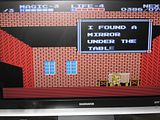
The next awesome thing about the town of Saria is that in order to obtain this spell, you must find the mirror that one of the women lost in the town and bring it back to her.  When Link finds this mirror, he exclaims "I found a mirror under the table!"  This is a novel experience, as it is the first and last time that Link will make use of the first-person case subjective pronouns.  That being said, I took a picture so that I could share that with you.  Most of the time in the series now that NPCs are in the picture, they do all of the talking and Link's response is inferred by facial expressions or by his actions.  Did he speak, is he just plain rude, or can he only speak to himself, as demonstrated in this photo?  This has been a mystery to Zelda fans for over a decade, since this is the only real evidence we have that Link can speak words.

You know, everyone has things they're good at and not good at...I'm good at listening and reading, I don't like to talk or to write...why bother when people already know what I'm going to say?  I was just excited to find this mirror so I shouted about it, not a big deal, really.  Though I am quite glad I did, it led to me to the ability to heal myself...now I don't need to visit the town whore every time I need to do so, I can take care of that business by myself.

Saria Region and Bagu's Cabin


All right, so here we searched through the woods to find the cabin of Bagu and began to explore a new region of Hyrule.  The game really valleys in its difficulty level now despite the obnoxious difficulty of the palaces, we are now in a region of Hyrule where grinding is much easier (for example, the octorok encounters offer at least 50 exp/encounter and the goriya offer at least 40).  As leveling up has become much easier, so in effect does making Link stronger and thusly does advancing the game.  In addition, once we traverse the maze which is just ahead of us and obtain the hammer, many more doors will open for us and over-world travel will become that much easier, making starting from the hub point not that big of a deal.

Either way, around Bagu's Cabin (the guy gives you a note which seems useless, but this note proves vital in Saria Town) you find the medicine bottle, which will also prove vital a bit later in our quest.  One of the great things about Bagu is that he is one of the NPCs you are forced to interact with to advance.  While most of the required interactions seem extremely forced (they are not smooth in transition nor do they seem to flow) for the eight-bit style and the novelty of the system, they did a great job on this.  Not to mention Bagu's cabin is hidden and all that people in Saria tell you is that the man exists.  Yeah, he does...on the other side of the river, hidden in the forest around a bunch of forced encounters.

Since we visited Bagu's Cabin, drove up Link's experience a bit and got everything that we needed to in our raid across the area, it is time to visit the village of Saria.

Sunday, August 22, 2010

Ruto and the Cave of Ruto

GroupA014.jpg image by amaraskyia
Link learns the Jump spell
While all of the towns spread across Hyrule feature a wealth of NPCs for Link to chatter with and learn more about the story or about where he should go next, towns only serve three required purposes for Link's visit (otherwise, the NPCs can be ignored...something that wasn't improved upon until the next installment in the series, where interaction with the NPCs becomes more thorough and more vital to your quest).  Either way, these three purposes are to refill your magic meter, refill your life meter and learn a new spell.  To learn the jump spell we had to bring the trophy in town, and some dame got really excited that we had found her town's sacred treasure that the goriya stole and invites us into her house.  (Wow...subtle, Nintendo).

One way or another, we reach the basement to find a short old man (disappointment) who teaches us the Jump spell.  Seems like a really silly spell, right?  All it does is strengthen an ability we already had.  I thought this on my first play-through too.  Then I realized that Jump is required to finish the game (you cannot escape certain caves without it, including the one we are approaching) and it makes fights against several of the bosses, including the second to last, incredibly more simplistic.  Usually in games where magic takes a primary role, it is the simplest spells that are your best friends while the complex ones can be ignored situationally.  This game is interesting in that it makes magic necessary to complete the game (as virtually every spell is needed in some situation to advance) while future titles that involve magic make it more of an option and frivolity.


The cave of ruto is where this game starts to take it up, even further, in difficulty.  This is the game's way of saying "grind or you're wasting my time."  You face strong monsters in close quarters that at your current level are tough (later, these guys are a joke).  The game, essentially, forces you to be prepared for what is to come and will not allow you to advance if your level of experience is not adequate.  Typical behavior for an RPG, but also a bit restrictive (and I very quickly tire of the area around the North Palace).

Retrieving the Trophy and Side Quests

GroupA012.jpg image by amaraskyia
Link Finds the Trophy
Between every adventure is a little side-questing, and the Legend of Zelda II does not disappoint.  Because of the nature of the game equipment runs are rather limited in this game, however, what it loses in over-world venturing for items it gains because you have to fight over-world enemies to be good enough to enter the challenges that the palaces present.  One way or another, in every town there is a damsel in distress and this damsel (or crone) is our ticket to a new magic spell.  The trophy is our ticket to helping this said damsel in the next town, as the goriya who was guarding it from us stole it from said town and evidentially, the trophy is of vital importance to the town's culture because they are all depressed and unwilling to assist Link without it.
GroupA013.jpg image by amaraskyia
Magic Container
Like every Zelda in the series, Link finds items which augment his survivability.  In this game, you have two meters of use: life and magic.  Consequentially, you have two items which augment these abilities: magic containers to add bars to your magic meter and heart containers to add bars to your life meter.  Unlike subsequent Zelda titles where Link needs to find pieces adding into a whole container or the previous one where magic did not exist, Link need only find one of these containers at a time and need not pursue a lengthy sidequest to augment his magic abilities.  This game does give you a little freedom as you could have actually gotten either the trophy or magic container before going to parapa palace however, traversing caves without the candle is treacherous business especially when said caves are chock full of enemies and lava traps.

Parapa Palace

GroupA009.jpg image by amaraskyia
Entrance to Parapa Palace
The Parapa Palace lies in the northeastern corner of the Parapa desert, very close to our starting location.  On the element of complexity and puzzles, this palace is actually rather lacking but the only major reason for the straight-forward nature of your first dungeon is that it is packed full of action.  Here you meet the dreaded Ironknuckle, an enemy who even late into the game is an annoyance.  This guy takes and matches Link's swordplay, and as you go they get to be better at defense (and eventually learn to copy Link's ability to shoot sword beams) which for them, means they are also a lot better at hurting you.  Ah well.  The perpetual point of making the first palace straight-forward is to tell the player that puzzle-solving is not the forte of this game: action is.  And if you don't like it, put it away right now.  I'll actually tell you right now that several times playing this game previously, before I knew that you needed to invest some time raising Link's stats before you set foot into this first dungeon, I gave up on it mid-way through this dungeon.  

GroupA010.jpg image by amaraskyia
Link Finds the Candle
The Candle is the first item you find in the dungeons, and your first inventory item in your quest.  This introduces the largest difference between this game, its predecessor and its successors.  The items you obtain are perpetually active and always offer their assistance; but we only ever have one offensive weapon: the sword.  What this means is now that we have the candle, underground caverns will be lit.  Of course, one must think how we were able to see down here in the first place since I don't see any torches anywhere.  But that aside, this opens many doors for us (and that is what Zelda is all about...opening doors, one at a time, until the entire world is open to us).
GroupA011.jpg image by amaraskyia
The Parapa Palace Statue - One Crystal Set
The boss of Parapa Palace is Horsehead, a warrior with, quite obviously, a horseface for a head he is quite dangerous.  After this palace has banged us up pretty badly, we are left only with the option of being extremely cautious with this very tall enemy in trying to strike his head with our sword.  At first, and without knowing anything about his movements or patterns, Horsehead is intimidating and often hits and kills Link.  However, we soon realize he moves predictably and can easily be struck.  Not to mention the magic we learned back in Rauru town helps us to survive (and will be one of our most valuable spells, finding useage throughout the entire game).  After the boss meets his end, we find our way to the final room of the dungeon, which has a mysterious statue.  These statues are in each palace, and are the key to our story: Link must place a crystal in each of these statues in order to get into the Great Palace to lay claim to the Triforce of Courage, which is the final piece in settling peace in Hyrule and removing the curse on Princess Zelda.  Compared to a usual theme of eight, this game has six palaces (excluding the Great Palace).

Friday, August 20, 2010

Rauru Cave and Parapa Desert

So this stint proves rather short.  We have no direct line from the North Palace area to the Parapa Palace, it is cut off by outcroppings.  So we have to travel through a dark, monster-infested cave to get there.  Since the item we need to light up caves is hidden within the palace we are going to visit, the cave is also dark, adding to our woes.  However, this is a comparatively simple task compared to those that are to follow.  This is the game saying: "if you find this overly difficult, stop playing now, I'm not the game for you."

GroupA008.jpg image by amaraskyia
The first Heart Container!
One way or another, finding our way through this relatively simple cave was easy, given that I already knew where and when enemies were going to be appearing in the dark.  The desert itself is fairly easy too if you know what you're doing.  While they look intimidating, the geldarms that appear in desert encounters are simple if you know what you're doing and since the desert is wide open, you can generally avoid encounters altogether.  The most significant thing of the Parapa Desert is finding, deep in an oasis, your first heart container: and every little bit helps us in this game, so each of these heart containers is a giant celebration.  Somehow though, a bunch of boomerang wielding  Goriya seemed to enjoy the comfort of the oasis as well and didn't seem too thrilled that I had paid them a visit.  Little do they know that a little bit later in the game, they will be one of my major grinding partners (easy enemies worth 20 experience points each).

One way or another, we quickly reach the entrance to the first palace...Parapa.

Town of Rauru

A few paces from the North Palace we encounter our first town: Rauru.  One of the interesting things of this game that shows up in sequels is quite subtle: the sages from Ocarina of Time are named for the towns of this game with a few exceptions (for obvious reasons, things cannot be linear from one point of the timeline to another).  One way or another, the town of Rauru introduces the element of the non-player character to the Zelda series and forever deepens the series along this level.  As opposed to its predecessor, where you wandered around a monster-infested over-world searching for monster-infested underworlds...the over world has random encounters with enemies and towns dot the landscape, giving evidence that Hyrule is actually a kingdom of people, not just trees.  However, like any video-game NPCs, these characters are blisfully unaware of their surroundings and only tell Link about his immediate dangers...IF they concern themselves as well.  After all, isn't the hero supposed to be helping them?  To hell with Zelda, after all! : )

GroupA006.jpg image by amaraskyia
Link visits the town "healer".
One of the best NPCs in this game, and one that you visit constantly because of this game's difficulty, is the town whore.  It's very subtle, but all of us with even one tenth of an imagination can tell what is happening after the door is closed.  A young woman in a striking red dress (first hint) invites Link into her home so that she can "help him" and beckons him to come inside her home (second hint).  After the door has closed behind the two naughties, she reveals "directly" what she is going to do..."I can refill your life."  A few moments later, and after your life meter has refilled a bit, Link emerges from the house...and the girl does not emerge until several moments later (final hint).  They definitely were doing something more than just drinking potions, methinks.  But hey, I guess even heroes need sexual amusement.  What's more amusing is that there is one of these in each town of the game, and as well, there is an old crone who refills your magic in much the same manner.  Now that one is...disturbing.

I don't see what the big deal is...heroes need some fun and relaxation too!  Helps us function.


GroupA007.jpg image by amaraskyia
Link learns "Shield"
In addition to the town's healer, the game also features a wise man in each town.  His purpose is far more direct and has more longevity in its benefit to us (as opposed to the information other NPCs provide and the health or magic refill that the healers provide).  These wise men are, once we meet satisfactory conditions in our magic level/number of magic containers; intended to teach us the spells that will make it easier to traverse the Hylian landscape/palaces (and in some cases, make us able to finish the game at all).  While learning the entire spell list isn't necessary, every spell that you learn proves invaluable to completing your quest (and there are some that you cannot complete the quest without, such as Jump, Fairy and Thunder).  One way or another, the old man in Rauru teaches you a great spell for the beginning of the game called Shield.  What this does is an effect like the blue ring in Zelda I (and incidentally, the spell turns you red like the red ring) and you take half-damage for the entire screen in which you cast the spell.  This spell is vital as it improves Link's survivability and in this action-packed adventure, he needs all the help he can get.

Magic?!  I'm no spellcaster...but I guess I shall try it out.  I rather like surviving, better than the alternative.


This old man, sometimes like others and like a few key NPCs in the town of Rauru, point you in the direction of where to continue your quest: Parapa Desert, where you'll find the first palace.  Well, you know, there was that huge desert north of this area; I wonder if that's it.  A little more grinding around Rauru and the North Palace and Link is ready to take on his first palace.

The North Palace


GroupA003.jpg image by amaraskyia
Link's First Battle
Here we are, embarking on the first leg of our journey.  This game is more difficult than any other in the series, but it offers many unique elements right off the bat from its predecessor...and while it introduces several elements to the series that will be seen in every game afterwards, it also plays with elements that will never been seen again.  One of the funnest thing, as seen here, is that while Link travels in a top-down overworld; most of the action takes place in side-scrolling sequences.  This is the only way to gain experience and to explore new areas as well.  As one may have presumed, the area that surrounds the North Palace, the palace where Zelda sleeps and where we begin the game is filled with easy enemies and the game intends for you to grind for awhile to build Link's statistics (see, in this game, unlike any other Zelda, you use experience to gain attack, defense, magic power and then eventually extra lives.)  but also intends for you to get irritated with this process fairly quickly, as all of the enemies surrounding the North Palace give little to nothing for experience and like in any RPG, the game forces you to move forward out of sheer boredom with your current surroundings.  The North Palace really serves one main purpose: the hub location for the entire game.  With the exception being after you have reached the Great Palace, you will always start the game from the North Palace in the chamber where Zelda is locked in her eternal slumber.  Incidentally, this is also the location of the final cut-scene of the game but that won't come until much later.

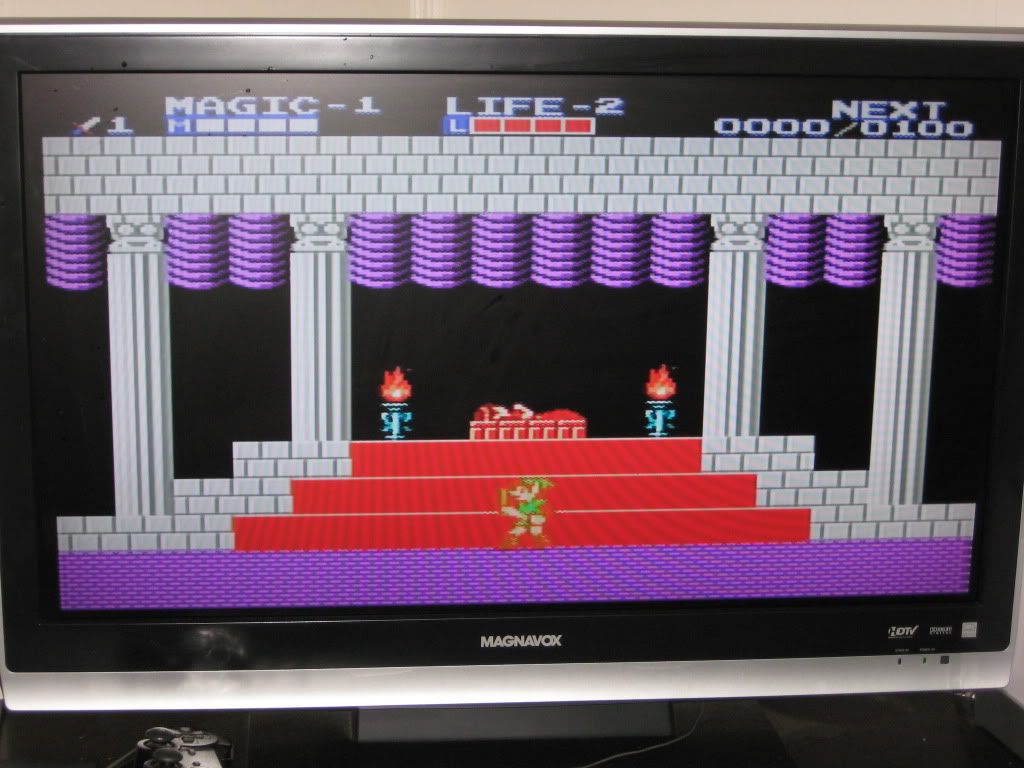
Zelda sleeps in the North Palace
What a doozy...so this is the real Princess Zelda.  I wonder why exactly that wizard put her to sleep in the first place...it's not like putting her to sleep helps him get the Triforce.  And what exactly are all of these monsters running about?  I thought Ganon was dead...

Wednesday, August 18, 2010

The Adventure of Link

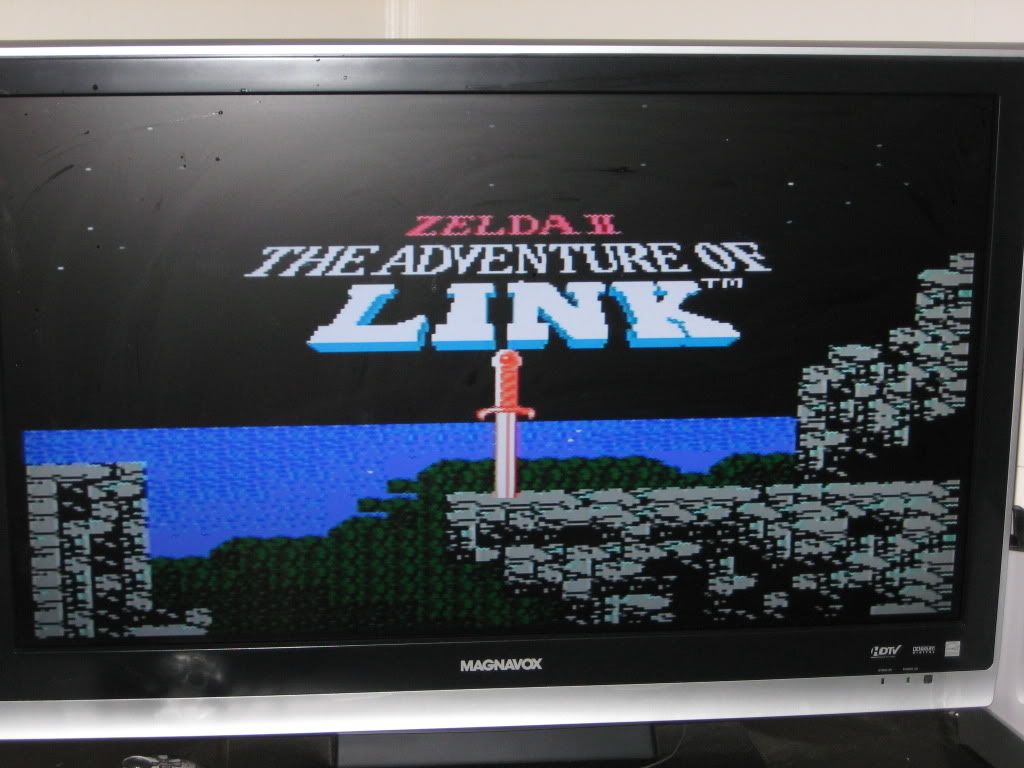
Title Screen: The Adventure of Link
Here begins Link's second adventure in The Legend of Zelda II: Link's Adventure.  Now, each title in the series tries to best the last in some way and add some dimension to the series by improving it or adding something new.  This game, by far, succeeded in its novelty.  While The Legend of Zelda by itself is a true original and a novelty, it set a standard from which Zelda II: Link's Adventure decided to deviate and create its own standard and become a novelty in of itself.  This is one of the major reasons, I believe, that the series was so successful: its first two games were true originals of their time though they built on elements of other games, both were independent of each other (one wasn't a boring replica of the other) and neither can really be deemed as all too similar to any game of their time.

The most interesting thing of note about Link's Adventure is that, chronologically, with the exception of the cel-shaded titles, though the game is in release order second; it is story-wise recognized as after Zelda I but before the cel-shades, making its story near the end.  Most of the titles to come after explain or unveil things about Hyrule that happened previously.

Link's Adventure is far more action oriented than puzzle.  It is not for the Zelda player who goes for puzzle-solving over action, which is one of the reasons it actually isn't one of my favorite titles, however, it does have its own unique charm to it and after you get into the system, the action isn't overtly difficult (just occassionally irritating, like any Zelda).  Link goes from the traditional over-world exploration/dungeoneering system to a different one.  While he still explores the overworld, he doesn't actually encounter his enemies directly on the overworld map.  Instead, symbols representing encounters try to ambush him and when they touch him, he enters an encounter (kind of like DnD) and he enters a side-scrolling encounter.  The dungeons are mapped much in the same way (side-scroll rather than overhead) adding a different dimension to the whole series.  This depart from tradition probably upset gamers early on but it can be really fun.  Also, Link has statistics to help him survive, much like in an RPG...making this Link even more unique.  Many of these things never show up again in Zelda titles, but they were a fun change and helped to succeed in giving players a different kind of challenge instead of the same one with a different color and story (who wants that in a sequel, anyway).

So all this being said, let us begin the Adventure of Link and save Hyrule from evil's grasp once again.  The story this time around is much more complicated, though much like Zelda I it is hidden from us for most of the game.

An evil wizard has locked Zelda in an eternal sleep, see.  The protagonist of this game is the exact same Link as from Zelda I except now, instead of being a tween, he's a teenager, a bit more grown up and still as adventerous.  This story reveals to us the nature of the name Zelda: the prince of this kingdom was seeking the Triforce and Zelda refused to reveal any information about it.  The prince could only see his own greed and looked to the help of a wizard to help him get that which he needed.  The wizard, however, was a conspirator and was looking to use the power of gold for himself to revive Ganondorf, the evil king we adventured long and hard to defeat last time around (and many times more in the future).  The wizard tricks the prince, and puts Zelda into an unbreakable sleep: only the Triforce can help her.  The prince decrees that all Princesses from that point forward are to be named "Zelda" in rememberance of this tragedy.  One way or another, this older Link notices a birthmark appear on his hand (in the shape of the triforce) and seeks counsel from Impa, the hidden guide through Zelda I who sought him in that quest.  Impa notes that the mark means that Link is the hero of time, fated to carry the Triforce of Courage, and reveals to him Zelda as well as the mystery behind the six palaces and the Great Palace: and that it is his destiny to journey through them to recover the Triforce of Courage.

This game is the first to introduce the Triforce of Courage and make the triforce a triplicite rather than duplicite entity.  This now fully defines the triforce, as we do not see the three elements without one another again, as we did in the first game.  In addition, this game also has you fully interacting with your world with NPCs and such, making the role-playing expereince of this RPG much deeper than that of its predecesor.

One of the major things to note about this game is its level of difficulty.  The game's experience point system is quite wonky, and as well, the threshold of baddies/current level is always in favor of your opponents, meaning that Link has to be very clever and careful as he travels the Hylian landscape.  Grinding is a huge part of the experience of this game, and as well as action over puzzle (though it does a nice job of combing both elements, it just focuses far more on action).